
Dragon Age lore is made richer by its readiness to break with canon
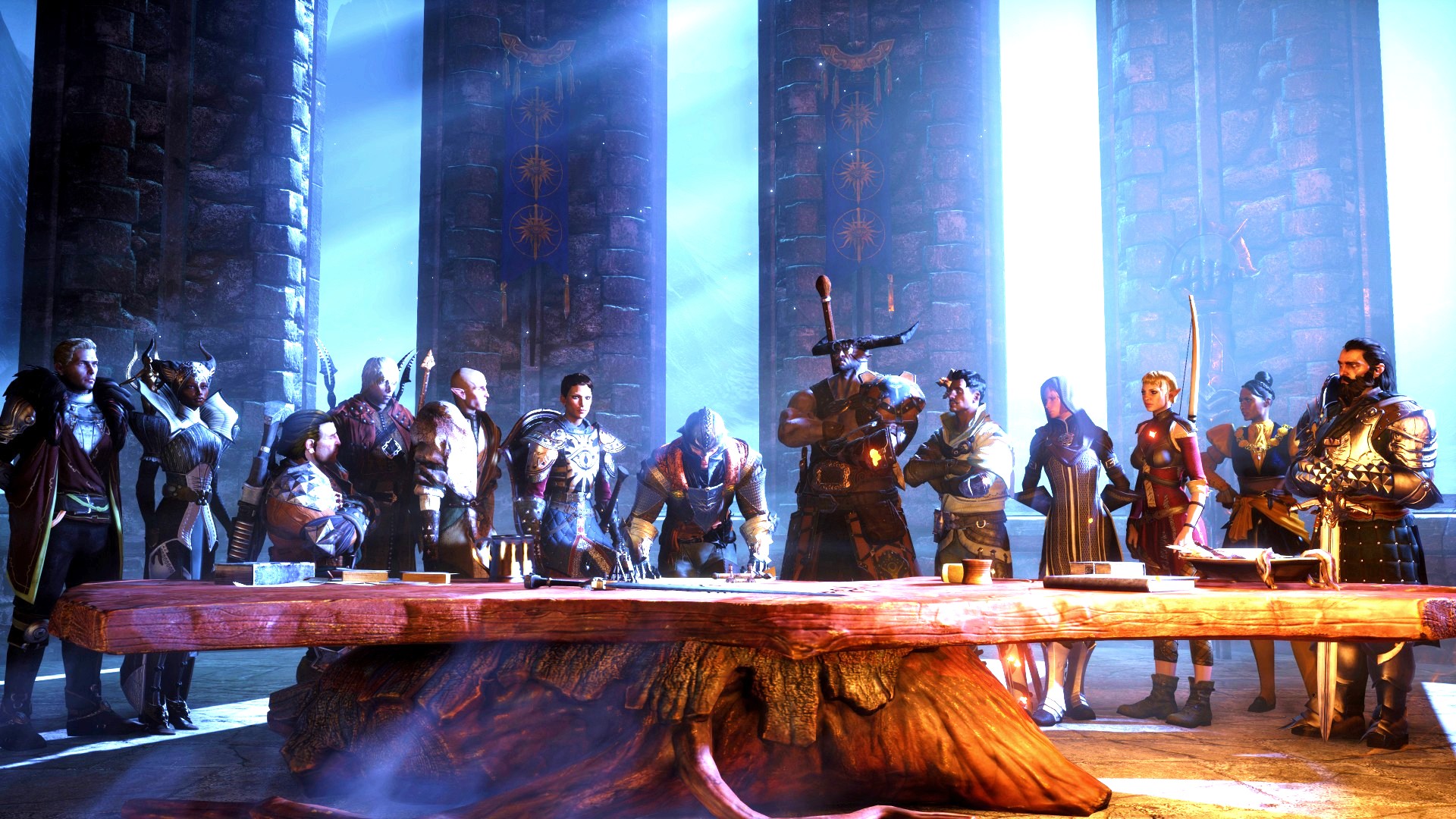
At school, we are often told that history is the story of humanity, a grand chronicle of events leading us to where we are now. Our minds place narrative over complex situations in an attempt to grasp a sense of order. This view of history has fed into how game worlds have been built. The ever pervasive concept of a static ‘lore’ being a tome of knowledge that can be accessed and referenced, adding context and depth to a world. And in games we love a rich lore. A big chunky block of information we can wrap around and lose ourselves in.
We are often spoilt when it comes to explaining why things are the way they are in a game world. Codices, wikis, clumsy environmental storytelling; we are given a range of resources in order to understand the virtual world in which we roam. A game’s lore inspires fans to dedicate hours to writing explanations or debating the tiniest details online, figuring out how it all pieces together. When we think of a game world’s history we think of it as a single narrative, a collection of events and characters, with little room for new branches once a sequence has been established.
But history is not an unchanging tome of information. History is constantly privy to the shifting perspectives of society, our unreliable memory, and new pieces of information suddenly shedding fresh light on a situation. For example the ancient city of Troy was widely assumed to not have existed until the excavations by Heinrich Schliemann in the late 19th century proved otherwise.
RELATED LINKS: Dragon Age: Inquisition system requirementsfrom PCGamesN https://ift.tt/35Em2Sj
Post a Comment